


Aiyoku Jan Barba
At a glance
Is Aiyoku Jan Barba worth trying?
Aiyoku by JAN BARBA is a Woody Aromatic fragrance for women and men.
- Best match
- Evening, Special Occasion wear in Fall, Winter
- Performance feel
- Good longevity with Moderate sillage
- Signature profile
- woody, earthy, citrus with Verbena, Agarwood (Oud), Patchouli
The first impression
Aiyoku by JAN BARBA is a Woody Aromatic fragrance for women and men. Aiyoku was launched in 2020. The nose behind this fragrance is Bartosz Puzio. Top note is Verbena; middle notes are Agarwood (Oud) and Patchouli; base notes are Cypriol Oil or Nagarmotha, Vetiver, Oakmoss and Cedar.
What shapes the scent
The perfumer behind it

Bartosz Puzio
Bartosz Puzio is a Polish perfumer known for his work with the niche brand Jan Barba, where he has created a diverse range of fragrances. His style balances classical structure with modern clarity, often highlighting natural ingredients and refined contrasts. Notable works from the collection include the lush floral of Fleuriste, the dark resinous depth of Chypre, and the metallic rose of Metarosa.
Notes pyramid
Top Notes
First impression · 15-30 min
 Verbena
Heart Notes
Core character · 2-4 hours
 Agarwood (Oud)
 Patchouli
Base Notes
Lasting impression · 4+ hours
 Cypriol Oil or Nagarmotha
 Vetiver
 Oakmoss
 Cedar
Cedar
The mood it creates
The Wanderer Archetype: Portrait of Aiyoku Jan Barba
Essence
Aiyoku embodies the Wanderer, whose home is the road itself. The initial verbena burst is the sharp inhale before a journey, while oud and vetiver trace the well-worn paths through forgotten temples. This fragrance speaks of leather satchels containing maps to places that no longer exist.
Like the Wanderer's life, the scent avoids easy categorization. Citrus brightness doesn't fade so much as transform into something darker and more intriguing - much like how foreign landscapes gradually rewrite a traveler's psyche.
Style & Aesthetic
Their wardrobe consists of garments that layer well across climates - a waxed cotton jacket lined with stolen hotel sewing kits, scarves that have doubled as bandages and currency. Every pocket contains curious artifacts: a Cypriol root from last monsoon season, a cedar chip from a Kyoto sento.
Philosophy & Values
They measure wealth in border crossings, not bank statements. For them, true understanding comes from watching how oud smoke curls differently in Marrakech versus Mumbai courtyards. Roots are for trees, they say - humans were meant to follow scent trails like the one Aiyoku leaves.
Relationships
They collect temporary kinships like passport stamps. Lovers learn not to ask when they'll return; friends receive postcards dated from seasons past. The only permanent address is a postal box in some neutral territory, its key perpetually lost and found.
Lifestyle
They wake not to alarms but to unfamiliar birdcalls. Breakfast might be bitter herbs foraged yesterday or airport lounge coffee - sustenance matters less than the ritual of motion. Nights are for mending boot seams by candlelight, the needle moving as steadily as their restless feet.
Shadow
Their freedom becomes its own prison. When every connection is provisional, even their reflection starts to feel like just another transient encounter. Somewhere, a cedar chest holds letters they've never dared to reread.
Conclusion
Aiyoku is the scent of a compass with no north - or perhaps too many. It captures the Wanderer's paradox: the more places they inhabit, the more they become citizens of that liminal space between departure and arrival.
If you like this, try these
Fragrances with a comparable profile - shared accords, notes, and character.
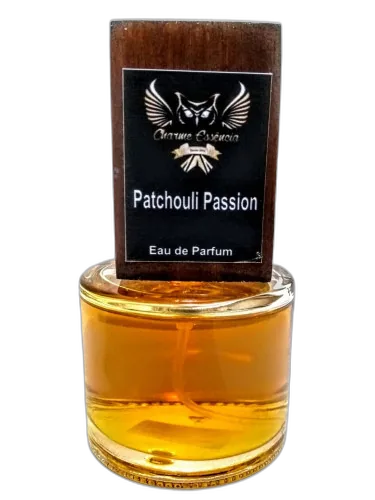
Charme Essência
Patchouli Passion Charme Essência
Shared top notes: verbena

July St Barthelemy
Larmes D'orient July St Barthelemy
Shared heart notes: agarwood (oud), patchouli

Rabanne
Black Xs Be A Legend Debbie Harry Rabanne
Shared heart notes: agarwood (oud), patchouli

Deraah Private
Perfect Oud Deraah Private
Shared heart notes: agarwood (oud), patchouli

Lorenzo Villoresi
Patchouli Lorenzo Villoresi
Shared heart notes: patchouli