
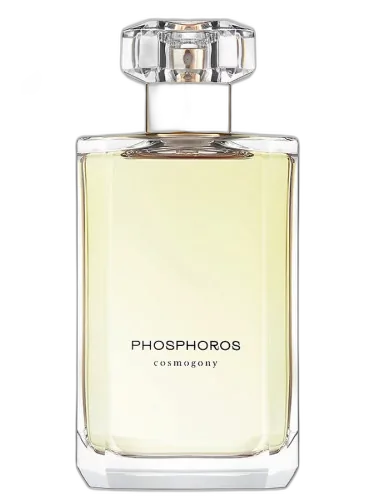

Phosphorus Cosmogony
At a glance
Is Phosphorus Cosmogony worth trying?
Phosphorus by Cosmogony is a Woody Floral Musk fragrance for men.
- Best match
- Evening wear in Fall
- Performance feel
- Very Good longevity with Strong sillage
- Signature profile
- citrus, floral, fruity with Bergamot, Mandarin Orange, Osmanthus
The first impression
Phosphorus by Cosmogony is a Woody Floral Musk fragrance for men. This is a new fragrance. Phosphorus was launched in 2023. The nose behind this fragrance is Angéline Leporini. Top notes are Bergamot and Mandarin Orange; middle notes are Osmanthus, Cinnamon, Davana and Rose; base notes are Patchouli, Sandalwood, Vetiver, Leather, Musk and Amber.
What shapes the scent
The perfumer behind it

Angéline Leporini
Angéline Leporini is a French perfumer known for her work with major houses like Amouage and Ajmal. Her style balances fresh, citrusy accords with deeper woody and oriental notes, as seen in 4711 Acqua Colonia Yuzu & Cedarwood and Epic Woman. She also creates complex, opulent compositions such as Qasida Dahabia and the green, modern twist of 4711 Remix Green Oasis.
Notes pyramid
Top Notes
First impression · 15-30 min
 Bergamot
 Mandarin Orange
Heart Notes
Core character · 2-4 hours
 Osmanthus
 Cinnamon
 Davana
 Rose
Rose
Base Notes
Lasting impression · 4+ hours
 Patchouli
 Sandalwood
 Vetiver
 Leather
 Musk
Musk
 Amber
Amber
The mood it creates
The Wanderer Archetype: Portrait of Phosphorus Cosmogony
Essence
The one who wears Phosphorus Cosmogony is a modern incarnation of The Seeker-an archetype defined by restlessness, curiosity, and an insatiable hunger for the unknown. Like phosphorus itself, they glow faintly in the dark, drawn to the edges of understanding, where light and mystery meet. Their scent is not merely a fragrance but an invocation-a blend of metallic sparks, smoky resins, and something almost celestial, as if distilled from the birth of stars.
The Seeker does not settle. They are the philosopher who questions every answer, the artist who dissolves boundaries, the traveler who never truly arrives. Their life is a pilgrimage without a fixed destination, for the journey itself is the meaning.
Style & Aesthetic
Their appearance reflects their inner duality. They favor textures that seem to resist definition-worn leather, iridescent fabrics, garments that look both ancient and futuristic. Their style is not careless but intentionally unanchored, as if they are always ready to shed their current form.
They might wear a coat lined with constellations, or a ring shaped like a fragment of meteorite. Their surroundings echo this: a home filled with curiosities-antique maps, half-finished manuscripts, strange instruments that hint at experiments abandoned or yet to come.
They thrive in liminal spaces-cities at dawn, deserts at dusk, the quiet hum of libraries at midnight. Their work is rarely conventional; they may be a researcher probing the edges of known science, an artist working with unstable mediums, a writer whose books resist genre.
They are drawn to risk, not for thrill alone, but because risk forces transformation. Yet this can lead to cycles of self-sabotage-abandoning projects just before completion, fleeing stability when it becomes too familiar. Their greatest challenge is learning when to stop seeking and begin building.
Philosophy & Values
To them, truth is not a static thing but a living flame-elusive, shifting, dangerous. They distrust dogma, preferring the flickering light of their own experience. Their philosophy is one of radical openness: they believe in the transformative power of doubt, in the necessity of burning away illusions to glimpse what lies beneath.
They value freedom above all-not just physical liberty, but the freedom to think, to reinvent, to discard old skins. They are drawn to paradoxes, to the places where opposites meet: science and mysticism, chaos and order, destruction and creation. Their mind is a crucible where ideas are melted down and reforged.
Yet this very hunger for truth can become its own prison. The Seeker risks becoming a perpetual outsider, unable to commit, always chasing the next revelation. Their shadow is the rootless wanderer-one who fears stagnation so deeply that they never allow themselves to truly belong.
Relationships
They attract others effortlessly, for there is something magnetic in their intensity. But intimacy is difficult. They are generous with ideas, with passion, with moments of profound connection-yet they struggle to remain present in the mundane.
Lovers and friends often feel like travelers who have briefly shared their fire before moving on. The Seeker does not intend cruelty; they simply fear the weight of permanence. Their shadow here is the unintentional ghost-one who leaves behind embers of longing in those who wished to stay.
Shadow
The Seeker’s brilliance is also their curse. In their quest for the beyond, they may forget the value of the here. Their disdain for convention can harden into contempt for those who find meaning in simpler things. Their fear of stagnation may blind them to the beauty of depth, of roots, of staying.
To transcend this, they must learn that true freedom is not just in the search, but in the choice to stop-and claim something as their own.
Conclusion
The wearer of Phosphorus Cosmogony is a being of luminous contradiction-forever drawn to the horizon, yet carrying within them the very light they pursue. Their life is not a straight path but a spiral, circling ever closer to the core question: What happens when the seeker becomes the found?
Perhaps one day, they will pause long enough to find out.
If you like this, try these
Fragrances with a comparable profile - shared accords, notes, and character.
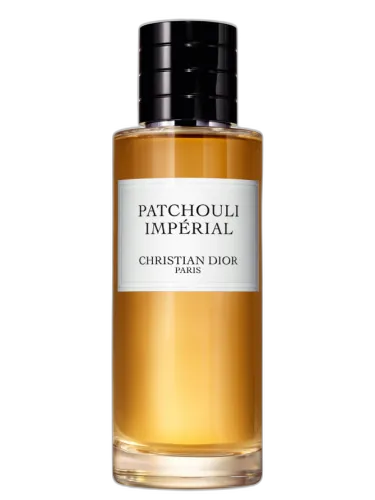
Dior
Patchouli Imperial Dior
Shared top notes: bergamot, mandarin orange
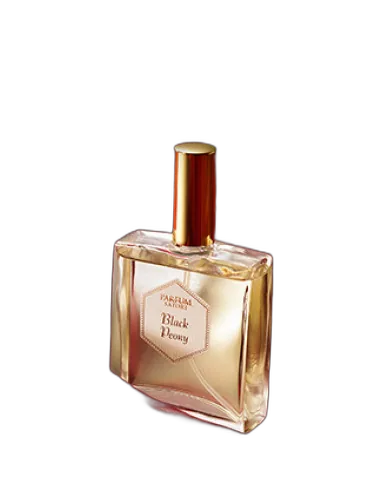
Parfum Satori
Black Peony Parfum Satori
Shared top notes: bergamot, mandarin orange
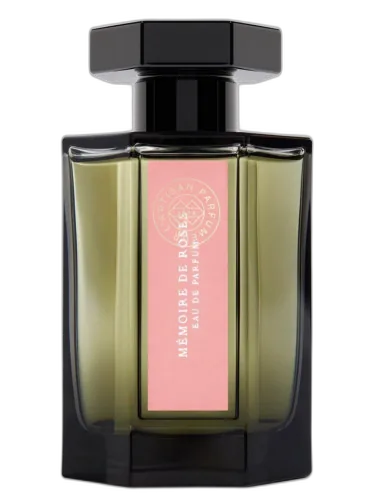
L'Artisan Parfumeur
Mémoire De Roses L'artisan Parfumeur
Shared top notes: bergamot, mandarin orange
Anima Vinci
Wood Of Life Anima Vinci
Shared top notes: bergamot, mandarin orange
Oriflame
Voyager Oriflame
Shared top notes: bergamot, mandarin orange