
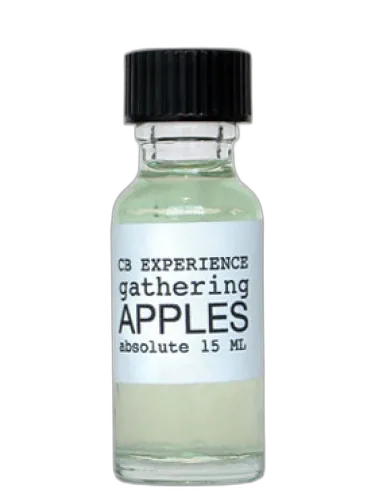
Gathering Apples Cb I Hate Perfume
At a glance
Is Gathering Apples Cb I Hate Perfume worth trying?
Gathering Apples by CB I Hate Perfume is a Aromatic Fruity fragrance for women and men.
- Best match
- Casual wear in Spring, Summer
- Performance feel
- Moderate longevity with Moderate sillage
- Signature profile
- fruity, sweet, fresh with Red Apple, Woodsy Notes
The first impression
Gathering Apples by CB I Hate Perfume is a Aromatic Fruity fragrance for women and men. Gathering Apples was launched in 2005. The nose behind this fragrance is Christopher Brosius.
What shapes the scent
The perfumer behind it

Christopher Brosius
Christopher Brosius is an American perfumer and founder of CB I Hate Perfume, known for his unconventional, narrative-driven scents. His portfolio includes fragrances like 2nd Cumming, At the Beach 1966, and Beautiful Launderette, which evoke specific memories and atmospheres. He also created Cumming for actor Alan Cumming, blending personal storytelling with olfactory art.
Notes pyramid
All Notes
Complete scent profile
 Red Apple
 Woodsy Notes
The mood it creates
The Archetype Archetype: Portrait of Gathering Apples Cb I Hate Perfume
Essence
To love Gathering Apples by CB I Hate Perfume is to embrace the quiet, unassuming poetry of the earth. This is not a fragrance for those who seek to dominate the senses or announce their presence with grandeur. Instead, it is for the one who finds beauty in the crisp, sun-warmed skin of a freshly picked apple, in the faint musk of autumn leaves underfoot, in the fleeting sweetness of a moment that cannot be preserved.
At their core, this person is an embodiment of The Innocent-a soul who seeks purity, simplicity, and an unspoiled connection to the world. They are not naive in the pejorative sense, but rather possess a deliberate resistance to cynicism. Their optimism is not blind; it is a choice, a refusal to let disillusionment harden them. They believe in the goodness of small things: the first bite of fruit, the rustle of wind through an orchard, the quiet joy of solitude.
Yet, like all archetypes, The Innocent has its shadow. Their idealism can slip into escapism, their love of simplicity into a fear of complexity. They may avoid the darker truths of life, retreating into nostalgia or pastoral fantasies rather than confronting harsh realities.
Relationships
They do not seek crowds, nor do they thrive in the clamor of social spectacle. Their friendships are few but deep, built on shared silences as much as conversation. They are the kind of person who remembers the way you take your tea, who brings you a single perfect pear instead of an extravagant gift.
Romantically, they are drawn to partners who appreciate subtlety-someone who understands that love is not always spoken in grand declarations but in the act of peeling an apple for them without being asked. Yet, their shadow may emerge here as well: their reluctance to engage in conflict can lead to passive resistance, an avoidance of difficult conversations that leaves their partner feeling unheard.
Shadow
Their greatest strength-their ability to find joy in simplicity-can also be their greatest weakness. When life becomes too harsh, too chaotic, they may withdraw entirely, constructing an idyllic inner world where nothing can disturb them. This retreat can manifest as a quiet stubbornness, an unwillingness to adapt when adaptation is necessary.
At their worst, they may become paralyzed by the fear of losing their purity, avoiding challenges that might "taint" them. They must learn that innocence is not the absence of experience but the ability to pass through it without becoming jaded.
Conclusion
If they embrace both their light and shadow, they become not merely a dreamer but a steward of beauty. They are the one who plants an orchard knowing they may never taste its fruit, who preserves the fleeting in memory and art. Their life is a testament to the belief that the world, for all its chaos, still holds pockets of quiet wonder-and that to notice them is its own kind of wisdom.
If you like this, try these
Fragrances with a comparable profile - shared accords, notes, and character.

DoubleDragon
Demna Doubledragon
Shared top notes: red apple

Victoria's Secret
Pink By Pink Victoria's Secret
Shared top notes: red apple
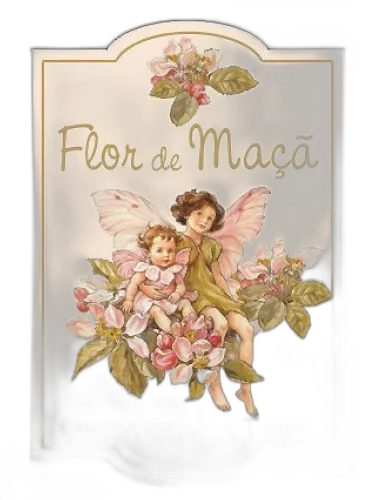
Companhia da Terra
Flor De Maca Companhia Da Terra
Shared top notes: red apple

Faberlic
Joyfl Faberlic
Shared top notes: red apple

Bath & Body Works
Leaves Bath & Body Works
Shared top notes: red apple